



Contemporary and Complimentary
In saving a mid-century West Vancouver home by renowned architect Ron Thom, Livingspace might be creating a blueprint for preserving region’s architectural history

A few months ago, Ross Bonetti was looking around West Vancouver for “interesting projects to do,” when he found just what he’d been dreaming of: a simple West Coast modern house designed by the renowned architect Ron Thom.
“It was a cool little house, and we thought, ‘Wow, this is beautiful,’ ” says the founder of the retail and design company Livingspace.
But at less than 1,900 square feet on a 9,000-square-foot lot, the circa-1952 house was also vulnerable to a developer’s bulldozer.
“The community wants to save these houses, but it’s never a good move financially for whoever wants to develop them,” Bonetti says. “We could have ripped down the Ron Thom house and built a new 6,500-square-foot house and financially made more money.”
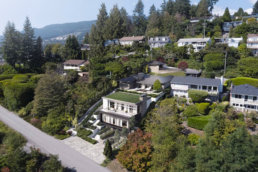
Instead, it became a perfect project for Livingspace Homes, the company’s new residential construction and renovation service. They worked with the District of West Vancouver to subdivide the lot, preserve the original home, and build a second one in a contemporary but complementary style.
Turns out, this kind of co-operation might just be the best way to save Vancouver’s rapidly vanishing design history.
THE DISAPPEARING CITY
Already so much has been lost to the pressures of a growing population and inevitable progress.
The Edwardian Birks Building, built in 1913, demolished in 1974. Art Deco masterpieces like the 1927 Georgia Medical-dental building, fallen to the wrecking ball in 1989. Countless Victorian cottages, craftsman houses, mid-century bungalows and entire city blocks of Vancouver Specials, replaced by glass-and-steel condos and shiny new office towers.
It’s not just historic buildings that are disappearing.
It’s the story of a city written in stucco and pre-treated lumber, in the Edwardian ornamentation of the boom years before the First World War, in the muscular Brutalism of the revolutionary 1970s, and most of all, in the clean lines of West Coast modernism, the 1950s and ’60s architectural style that defines Vancouver more than any other.
West Coast modernism is the rain-soaked regional expression of mid-century modernism, the optimistic design movement that swept postwar North America in a wave of post-and-beam construction and kidney-shaped coffee tables.
Influenced by Frank Lloyd Wright, the Bauhaus and Japanese residential architecture, it reached its heyday in the 1950s, when war-weary artists and architects sought respite in the coast’s natural beauty.
“West Vancouver was attractive to them because they liked the rocky lots rather than flat ones. And that was inspiration for a bunch of architects to come to West Vancouver and design houses,” Bonetti says.
Among them was Ronald Thom (1923-1986), who apprenticed at the Vancouver firm of Thompson, Berwick & Pratt, the incubator for such notable architects as Arthur Erickson and Barry Downs. Known as a gifted draughtsman, Thom designed Massey College in Toronto, Trent University in Peterborough, Ont, and numerous award-winning houses in Vancouver.
They were typically of modest size, constructed of humble materials like stucco or wood, and built on cliffs or surrounded by trees and lush gardens, with flat or low-pitched roofs, clerestory windows, deep eaves, big windows and exposed post-and-beam structure.
“They were definitely done on a budget, but the simplicity and beauty of them is the open spaces,” Bonetti says. “And the use of windows, to enjoy nature, and having good overhang for the rain or the sun.”
But although many of these are now designated heritage homes, they have few legal protections. That’s how a masterpiece of West Coast modernism — the 1962 Forrest-baker House designed by Thom — was nearly lost, and still could be.
In 2012, the Eyremont Drive property was purchased by a man who intended to knock down the 3,000-square-foot structure and build a 15,000-square-foot mansion in its place.
It has reportedly been sold since then, and in late 2019 its most recent owner filed an application for demolition.
In a bid to save it, the District of West Vancouver issued two 60day temporary protection orders before a North Vancouver developer agreed to purchase it, subject to negotiations with council. That could mean a Heritage Revitalization Agreement that involves some sort of subdivision, similar to the one Bonetti arranged for his project.
“These are important pieces of architecture,” Bonetti says. “Even this house, it’s lucky Livingspace purchased it, because it could have been torn down.”
WORKING WITH THE DISTRICT
After Bonetti found the Ron Thom house on Duchess Avenue, he worked with the District of West Vancouver on an agreement that would permit them to subdivide the lot and build a second house on it. Part of the agreement also allows the original home to be used as an Airbnb, the only legal one on the North Shore.
“Our intention is to keep it as a nightly rental so other people can see it,” Bonetti says.
Livingspace is making minor upgrades to the house and furnishing it with mid-century-inspired pieces like the Ligne Roset “Togo” sofa designed in 1971. “The only thing we’re going to do is clean it up a little bit and modernize the bathrooms,” Bonetti says.
As for the new house, Livingspace worked with architect Howard Airey to design it in a contemporary style “in keeping with the Ron Thom house,” and expects construction to be complete by fall 2021.
It will be built below the original one, with a grass roof that helps it blend into the landscape. “Luckily, the property is on a slope, so we are able to build the house without obstructing the view,” Bonetti says.
At 3,800 square feet, including the garage, it will be smaller than many new builds, but Bonetti believes there is a market for “that smaller, new house that’s well built.”
“If the house is really designed well, you don’t need as much space. There’s a lot to be said for good spatial planning.”
In any case, he points out, “Our desire was to save this piece of architecture.
“It’s been a fun project. It’s taken longer than we thought to get the approvals, but we’d like to work on more projects like this with West Vancouver, or even the City of Vancouver,” he says.
“You have to find the right property to do a subdivision like this. But I think there is opportunity to do more of these, and you can do it, so it’s worth it financially for the developer.”
And besides, he says, just to be involved in a project connected to Thom, “for a design junky like me, it was a real thrill.”

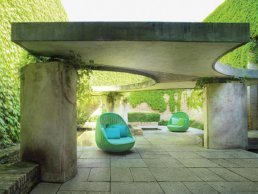
Turn your backyard into an oasis with the perfect outdoor furniture
Turn your backyard into an oasis with the perfect outdoor furniture
Patio season is finally here so it’s time to head outdoors. Fiona Forbes talks with Ross Bonetti from Living Space about some of the coolest patio furniture from around the world.
Livingspace made in Italy
Made in Italy
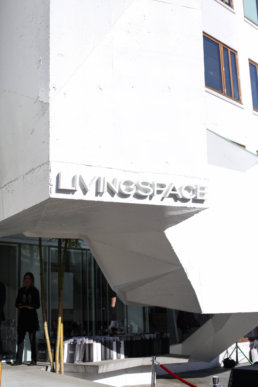
Livingspace owner Ross Bonetti and partnering brands Paola Lenti, Minotti, and MDF Italia, invited guests to mark the Vancouver showroom’s expansion to the fifth floor of the building with a celebration of Italian food, drink, and music on their entrance patio. Hosts and guests included Alessandro and Susanna Minotti of Minotti furniture, Marco Piscitelli of Molteni Dada, Carola Bestetti of Living Divani, Maria Porro of Porro Design, and Carolina Lanzani of MDF, all visiting from Italy to commemorate Bonetti’s 30 years at Livingspace, and the re-launch of his showroom. The expansion makes the Livingspace emporium a place clients can redesign their closets, renovate entire kitchens, or revamp their patios–in addition to surveying the luxury furniture Bonetti has long exhibited in Vancouver.
Livingspace & Livingspace Homes World Housing Ambassadors
World Housing introduces Livingspace & Livingspace Homes as new Ambassadors
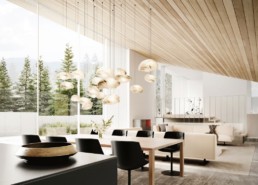
If anyone understands the significance and impact of a home, it’s Livingspace. We are proud and excited to introduce to you Livingspace and Livingspace Homes as our new World Housing Ambassadors!
Established in 1988 by Vancouver native Ross Bonetti, Livingspace has grown to become the city’s premier destination for modern furniture, kitchens, closets, bathroom and lighting. The concept for Livingspace was inspired by an appreciation for modern design, and the desire to create a unique, approachable and customer-centric retail environment catering to both the consumer and professional design community. The company has recently expanded to include Livingspace Homes, a fully integrated, residential construction and renovation service, dedicated to delivering exceptional quality homes to compliment the modern lifestyle.
Luxury Homebuilding
Livingspace partnered with Managing Director Sam Whiffin to provide an extensive experience and unique approach to new home construction and renovations through the services of Livingspace Homes. Livingspace Homes is a full-service, integrated residential development and interior design company based in Vancouver, BC. Together, Sam and Ross provide homeowners with a comprehensive and full-service approach to inventing, designing and constructing a home like no other.
Party with Purpose
World Housing and Livingspace kicked off their powerful partnership with throwing World Housing’s inaugural ‘House Party’ on February 1st, 2020. Ross Bonetti and Sam Whiffin played pivotal roles in both hosting and participating in the event, and ultimately its momentous success. Through this event, over $500,000 were raised to build safe housing for over 200 women, ages 2 to 102 in the Girls2Grannies Village in Cambodia.
This Western Living Cover Star Is Now Up For Sale
This Western Living Cover Star Is Now Up For Sale
The original Battersby Howat design was a winner in our Residential Design Awards in 2005.
Before we had our Designers of the Year Awards, Western Living had the Residential Design Awards. Where Designers of the Year touches on all forms of design—interiors, furniture, industrial, fashion, etc—the RDAs focused specifically on home design. And this home was a winner in 2005.
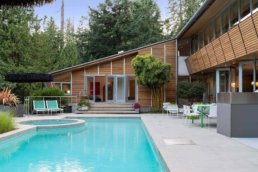
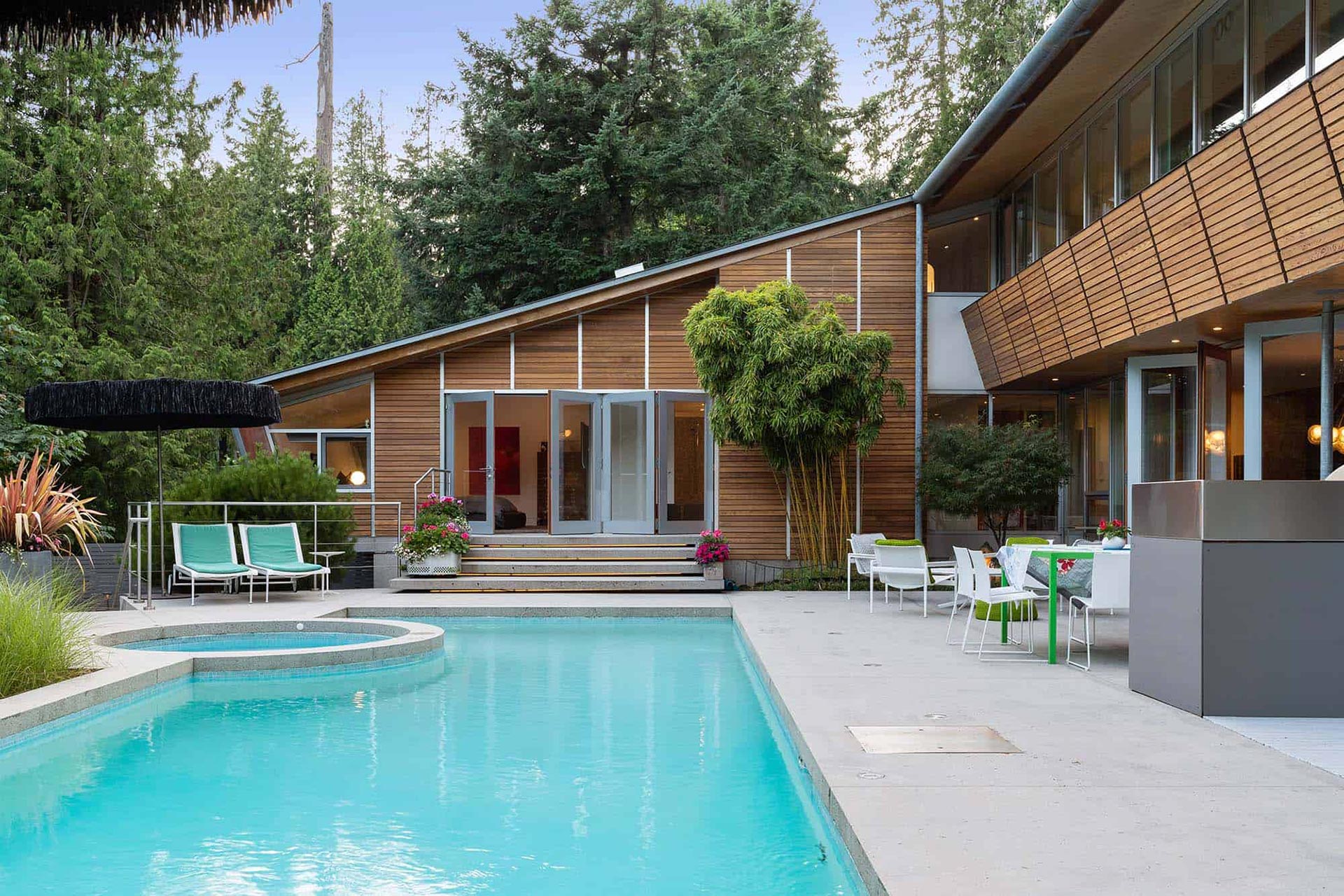
Designed by two-time Designers of Year winners Battersby Howat for Livingspace owner Ross Bonetti, it’s a five-bedroom, five-bathroom home that wraps around an internal courtyard, with that stunner of a pool. It’s furnished by Livingspace, of course, so it’s kitted out with gorgeous interiors too—to match the signature Battersby Howat modern interiors. And, as is the case for all BH homes, the landscape is fully imagined too: a half-acre of mosses, natural grasses and hardscaping.
It’s now on the market for $4.7 million—a sweet chance to own a cover star, and a piece of West Coast Modern history. In the meantime, have a peek inside this gorgeous place—we love all Battersby Howat designs at this magazine, and this early work of theirs for Bonetti is no exception.
Ron Thom home a blueprint for preserving Vancouver's architectural history
Ron Thom home: A blueprint for preserving Vancouver’s architectural history
Livingspace Homes worked with the District of West Vancouver to subdivide the lot, preserve the original home, and build a second one in a contemporary but complementary style.
A few months ago, Ross Bonetti was looking around West Vancouver for “interesting projects to do,” when he found just what he’d been dreaming of: a simple West Coast modern house designed by the renowned architect Ron Thom.
“It was a cool little house, and we thought, ‘Wow, this is beautiful,’ ” says the founder of the retail and design company Livingspace.
But at less than 1,900 square feet on a 9,000-square-foot lot, the circa-1952 house was also vulnerable to a developer’s bulldozer.
“The community wants to save these houses, but it’s never a good move financially for whoever wants to develop them,” Bonetti says. “We could have ripped down the Ron Thom house and built a new 6,500-square-foot house and financially made more money.”
Instead, it became a perfect project for Livingspace Homes, the company’s new residential construction and renovation service. They worked with the District of West Vancouver to subdivide the lot, preserve the original home, and build a second one in a contemporary but complementary style.
Turns out, this kind of co-operation might just be the best way to save Vancouver’s rapidly vanishing design history.
The disappearing city
Already so much has been lost to the pressures of a growing population and inevitable progress.
The Edwardian Birks Building, built in 1913, demolished in 1974. Art Deco masterpieces like the 1927 Medical-Dental building, fallen to the wrecking ball in 1989. Countless Victorian cottages, craftsman houses, mid-century bungalows and entire city blocks of Vancouver Specials, replaced by glass-and-steel condos and shiny new office towers.
It’s not just historic buildings that are disappearing. It’s the story of a city written in stucco and pretreated lumber, in the Edwardian ornamentation of the boom years before the First World War, in the muscular Brutalism of the revolutionary 1970s, and most of all, in the clean lines of West Coast modernism, the 1950s and ’60s architectural style that defines Vancouver more than any other.
West Coast modernism is the rain-soaked regional expression of mid-century modernism, the optimistic design movement that swept post-war North America in a wave of post-and-beam construction and kidney-shaped coffee tables. Influenced by Frank Lloyd Wright, the Bauhaus and Japanese residential architecture, it reached its heyday in the 1950s, when war-weary artists and architects sought respite in the coast’s natural beauty.
“West Vancouver was attractive to them because they liked the rocky lots rather than flat ones. And that was inspiration for a bunch of architects to come to West Vancouver and design houses,” Bonetti says.
Among them was Ronald Thom (1923-1986), who apprenticed at the Vancouver firm of Thompson, Berwick & Pratt, the incubator for such notable architects as Arthur Erickson and Barry Downs. Known as a gifted draughtsman, Thom designed Massey College in Toronto, Trent University in Peterborough, and numerous award-winning houses in Vancouver.
They were typically of modest size, constructed of humble materials like stucco or wood, and built on cliffs or surrounded by trees and lush gardens, with flat or low-pitched roofs, clerestory windows, deep eaves, big windows and exposed post-and-beam structure.
“They were definitely done on a budget, but the simplicity and beauty of them is the open spaces,” Bonetti says. “And the use of windows, to enjoy nature, and having good overhang for the rain or the sun.”
But although many of these are now designated heritage homes, they have few legal protections. That’s how a masterpiece of West Coast modernism—the 1962 Forrest-Baker House designed by Ron Thom—was nearly lost, and still could be.
In 2012, the Eyremont Drive property was purchased by a man who intended to knock down the 3,000-square-foot structure and build a 15,000-square-foot mansion in its place. It has reportedly been sold since then, and in late 2019 its most recent owner filed an application for demolition.
In a bid to save it, the District of West Vancouver issued two 60-day temporary protection orders before a North Vancouver developer agreed to purchase it, subject to negotiations with council. That could mean a Heritage Revitalization Agreement that involves some sort of subdivision, similar to the one Bonetti arranged for his project.
“These are important pieces of architecture,” Bonetti says. “Even this house, it’s lucky Livingspace purchased it, because it could have been torn down.”
Working with the District
After Bonetti found the Ron Thom house on Duchess Avenue, he worked with the District of West Vancouver on an agreement that would permit them to subdivide the lot and build a second house on it. Part of the agreement also allows the original home to be used as an Airbnb, the only legal one on the North Shore.
“Our intention is to keep it as a nightly rental so other people can see it,” Bonetti says.
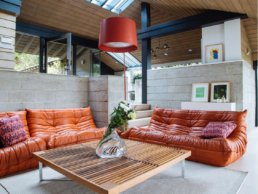
Livingspace is making minor upgrades to the Ron Thom house and furnishing it with mid-century-inspired pieces like the Ligne Roset “Togo” sofa designed in 1971. “The only thing we’re going to do is clean it up a little bit and modernize the bathrooms,” Bonetti says.
As for the new house, Livingspace worked with architect Howard Airey to design it in a contemporary style “in keeping with the Ron Thom house,” and expects construction to be complete by fall 2021.
It will be built below the original one, with a grass roof that helps it blend into the landscape. “Luckily, the property is on a slope, so we are able to build the house without obstructing the view,” Bonetti says.
At 3,800 square feet, including the garage, it will be smaller than many new builds, but Bonetti believes there is a market for “that smaller, new house that’s well built,” adding, “If the house is really designed well, you don’t need as much space. There’s a lot to be said for good spatial planning.”
In any case, he points out, “Our desire was to save this piece of architecture.
“It’s been a fun project. It’s taken longer than we thought to get the approvals, but we’d like to work on more projects like this with West Vancouver, or even the City of Vancouver,” he says. “You have to find the right property to do a subdivision like this. But I think there is opportunity to do more of these, and you can do it, so it’s worth it financially for the developer.”
And besides, he says, just to be involved in a project connected to Ron Thom, “for a design junkie like me, it was a real thrill.”
Secrets and lives with Livingspace Interiors’ Ross Bonetti
Welcome to WordPress. This is your first post. Edit or delete it, then start writing!

Living Large
Living Large
The owner of a luxury furniture store in Vancouver has created a retail space for modern design that feels like home.
Ross Bonetti, founder of Vancouver’s Livingspace, loves the West Coast lifestyle, and the work-life balance it brings.
“I’m 60 years old now, [and] I’m super-healthy,” he says. “It’s part of the Vancouver lifestyle. I encourage people to stay healthy and stay active. I have no real plans of retiring.”
Bonetti describes himself as “casual,” and enjoys sports and boats. Though he enjoys the laidback Vancouver lifestyle, he says achieving success is not all fun and games.

“In any profession or anything you do, you need discipline where you get up in the morning,” he says. “For 30 years, a lot of hard work goes into a company, so you have to get up in the morning and get to work.”
Livingspace is celebrating its 30th anniversary, and has grown ten times larger since its inception. It now inhabits a five-level, 30,000-square-foot retail space in the chic design-focused Armoury District.
It’s family-run, and one day, Bonetti will pass the reins to his children. He’s tried to instill the same work ethic that his father instilled in him.
“Our kids have grown up in a good environment, had lots of things in their life, lots of fun and also lots of material things; but they have noticed that their mother and I work very hard, and still work very hard,” Bonetti says.
His two sons now work at Livingspace, so they can see even more intimately how much effort Bonetti puts in “to get it right for the customer,” he says.
One of the services his company offers is Livingspace Homes, which designs and supplies furniture for the entire home. Bonetti is currently building his own 6,300-square-foot home using this world-class service. Livingspace will supply everything inside his new home, including the kitchens, closets, bathrooms, flooring, and tiling.
Mind for design
“My father jokes now that when I was a baby, I would feel my baby blanket for thread count,” Bonetti says with a laugh.
Bonetti has always appreciated design, including anything from furniture to cars to hockey gear. When he got older and travelled with his parents, he would usually end up in a modern furniture store, exploring.
Back in 1952, Bonetti’s father opened a retail appliance store on the North Shore. That retail background inspired Bonetti to establish Livingspace, his own retail furniture store, instead of becoming a designer.
Since 1988, Bonetti has taken a different approach with Livingspace. His focus has been to not only bring the world’s best modern design to Vancouver, but also to give his store a new atmosphere.
“I think for a long time, modern furniture stores had this art-gallery feel to them, where if you didn’t know about the art or the furniture, you weren’t really invited to the store,” he says. “With Livingspace, we want to be a very, very friendly design store.”
He welcomes people into his store who may know very little about modern design.
“We need to be able to educate people and explain [why our furniture] is expensive, and the difference in these pieces compared to going to a regular furniture store,” he says.
The layout of Livingspace is also unique. Its “shops within a shop” concept allows each brand to have its own aesthetic and represent itself just as it would in its own showroom in Milan or New York.
Bonetti is also extremely detail-oriented in his eye for design, which influences the ambiance of the store. On his store shelves, for example, the books and other objects are painstakingly chosen.
“These pieces are giving the room a feel,” he says. “It gives you a feel of how you can display things in your own house, because you don’t have to fill every shelf. It’s all about the unit. It’s about the lighting. It’s about the whole feel of the units.”
Inspiring and educating people in Vancouver is what Bonetti believes he was born to do.
“Livingspace is the house, and we’re hosting all our brand partners in the house,” he says. “I want my staff to get up when people come in the door and greet people… I just want our staff and the store to be very, very engaging for people.”